
The rout in Adani Group stocks after US-based short seller Hindenburg Research released a report on January 24 has sparked a rebound in trading activity this month. The average daily trading volume (ADTV) for the cash segment (both NSE and BSE combined) so far in February stands at Rs 59,346 crore, and is around 15 per cent more than the previous month's tally of Rs 51,844 crore, which was the lowest in six months. The ADTV for the futures and options (F&O) segment rose to a record Rs 204 trillion (notional turnover) against Rs 202 trillion in January.


Sensex catapults 1,241 points and Nifty vaults 382 points in two sessions in a row.

The apex body of petroleum workers in Assam on Thursday said it has stopped transportation of fuel to Meghalaya, following reports of attacks on vehicles from Assam in the backdrop of violence along the inter-state border that left six people dead.
Setting at rest any confusion over rollback of divestment of cash-rich oil companies in the wake of blue chip oil firms taking a beating in the stock market

'iNCOVACC' is priced at Rs 800 for private markets and at Rs 325 for supplies to the government of India and state governments.

Earnings growth, attractive valuations and change in FPI flows from negative to positive over the next 12 months are some of the key triggers for an upside. "A poor monsoon, high inflation and further rate hike are some of the key risks
The Securities and Exchange Board of India (Sebi)'s decision to require a minimum of 25 per cent public shareholding for government companies translates into around Rs 60,000 crore (Rs 600 billion) in divestments in the next three years.
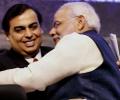
As the nation woke up to images of Prime Minister Narendra Modi splashed across the front page of newspapers by Reliance Industries to announce the launch of its 4G services, Shiv Sena's Member of Parliament from South Mumbai, Arvind Sawant, was not impressed.
Over 210,000 executives in estimated 240 central public sector undertakings are in for a bonanza with a pay revision committee recommending a massive hike in their annual cost-to-company. The hike ranges between 379 per cent at the highest level and 57 per cent at the lowest across companies and levels.

The new guidelines restrict bankers not just from advising private sector companies in the 'same line of business' on public issues.

Among top losers, Reliance Industries (RIL) sank over 4 per cent, after the company shelved a proposed deal to sell a 20 per cent stake in its oil refinery and petrochemical business to Saudi Aramco for $15 billion. Other laggards included Bajaj Finance, Bajaj Finserv, NTPC, SBI and Titan.

'Returns can be very variable in equity markets.' 'That is why I tell small investors don't put 100 per cent of your money in equities, even if you are young.'

Since March 31, 2022, the PSBs' market cap has risen 43.7 per cent, from Rs. 7.29 trillion to Rs. 10.47 trillion. It's time for the government, the majority owner of public sector banks, to reap the benefit of the rally in bank stocks, recommends Tamal Bandyopadhyay.

Bharti Airtel was the top gainer in the Sensex pack, rising around 4 per cent, followed by Tech Mahindra, HDFC, Kotak Bank, M&M and HCL Tech. NSE Nifty advanced 21.85 points to 16,280.10.

A total of 180 NSE-listed companies have not appointed a woman director.
Officers of public sector oil companies have threatened to go on an indefinite strike from August 21 if their demand for higher salaries was not met.

As oil marketing companies (OMCs) stare at huge under-recoveries, India is facing fuel shortage across the country with states like Rajasthan, Madhya Pradesh, Karnataka Uttarakhand, Gujarat and Haryana being the worst hit. The under-recoveries suffered by OMCs are around Rs 20-25 a litre for diesel and Rs 14-18 a litre for petrol, said sources. Government and state-run companies denied reports of any crisis or supply-side issues on the availability of fuel.
Sources said the company had already applied for a licence to produce defence products.
Confronted with competition, state-run logistics companies are opting for joint ventures among themselves and with the private sector.
Finance Minister P Chidambaram on Thursday made a double pitch for public sector companies. First he urged private sector companies to enter into joint venture partnership with PSUs

The Centre is in "mission mode" to fill vacancies in government departments and ministries. The Department of Expenditure is currently following up with other wings of the government to expedite pending appointments. Regular follow-ups are being made to fill the vacant positions, so that the stated target of eliminating 1 million vacancies is met by December 2023, ahead of the next Lok Sabha elections. Even as the nodal ministry for filling vacant positions in the government is the Department of Personnel and Training (DoPT), the Department of Expenditure's Establishment Coordination (Personnel) division is providing support for the recruitment drive.

The department of investment and public asset management (Dipam) can also seek in-principle approval from the Cabinet Committee on Economic Affairs (CCEA) for strategic divestment of PSUs on a case-to-case basis considering investor appetite and sectoral trends.

After the fiasco in March this year over the share sale in Oil and Natural Gas Corporation ( ONGC ), the government has softened its stand over the pricing.

Net investments in active equity mutual fund (MF) schemes rose to Rs 7,300 crore in December after declining to a 21-month low of Rs 2,260 crore in November, shows the latest data from the Association of Mutual Funds in India (Amfi). The rebound in net inflows was driven by a surge in investments and moderation in redemptions. While the inflows into these schemes rose 5 per cent month-on-month (MoM) in December, the redemptions were 14 per cent lower compared to November.

ETFs function like a mutual fund scheme and have underlying assets of government-owned companies.
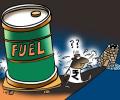
The windfall tax on oil produced within India and fuel exported overseas will make up for more than three-fourths of the revenue that the government lost when it cut excise duty on petrol and diesel to cool soaring inflation, industry sources said. India on July 1 joined a select league of nations globally that have taxed windfall gains accruing to oil companies from soaring energy prices. The government slapped a Rs 6 per litre tax on the export of petrol and jet fuel (ATF) and Rs 13 a litre on the export of diesel effective July 1. Additionally, a Rs 23,250 per tonne tax was levied on crude oil produced domestically.

Adani group stocks have taken a beating on the bourses after Hindenburg Research made a litany of allegations, including fraudulent transactions and share price manipulation at the Gautam Adani-led group. The group has maintained it complies with all laws and disclosure requirements.
The entire basket is likely to suffer for sometime and offer lucrative short positions.

Anup Roy and Krishna Kant on the challenges the public sector banks face in revitalising themselves
Petroleum Minister Mani Shankar Aiyar on Thursday held discussions with chief executives of public sector oil companies to explore the possibility of merging BPCL and HPCL with ONGC and OIL with IOC to create two oil behemoths.
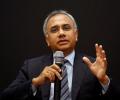
Infosys CEO Salil Parekh has got a massive 88 per cent jump in annual remuneration to Rs 79.75 crore, making him one of the highest-paid executives in the country. The software services firm has sought shareholders' approval for the reappointment of Parekh as chief executive officer and managing director for a second five-year term beginning July 1. According to the company's annual report released on Thursday, Parekh, 58, took home a salary of Rs 71.02 crore in the fiscal year ended March 31, 2022.

The BSE Sensex slumped 456 points on Wednesday, tracking losses in index majors Reliance Industries, Infosys and ICICI Bank as market participants continued to book profits at high levels.

Three employees of a BSNL franchise were seriously wounded in a militant attack in Kashmir's Sopore town on Monday morning.

As per the structure proposed, 99 per cent of government holding in the bank will be shifted to the Holding Company and the government will retain 1 per cent with itself so that it remains a state-owned bank.
Financial performance, tax issues to be discussed on June 13 meeting.

Since the beginning of 2020, i-bankers have collected nearly Rs 1,800 crore by way of IPO fees. Interestingly, the India fees this year form just 1 per cent of the global fee pool of $13.7 billion from IPOs.

Parekh said divestment can unlock huge funds.

In eight cases, the banks would violate the minimum public shareholding norms if their promoter, the Government of India, infused capital as announced.
